
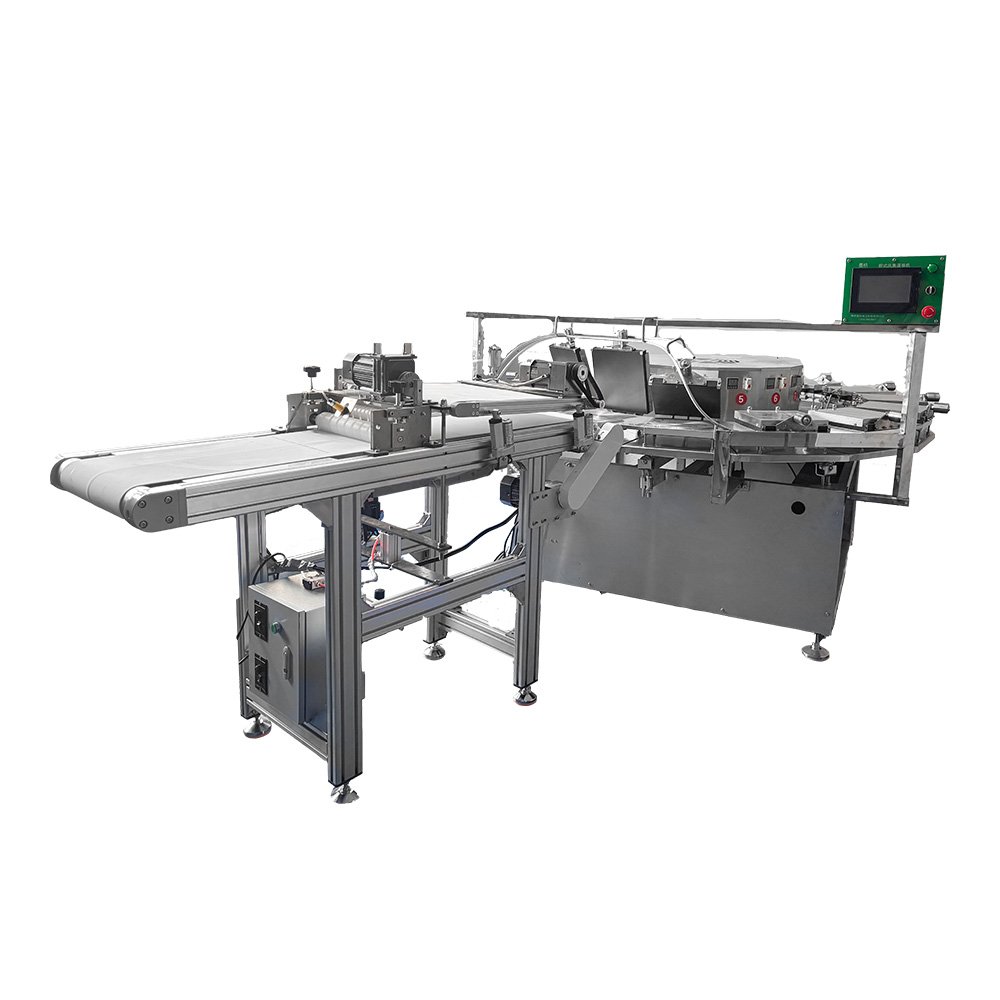

9 Cavity Egg Roll Machine
Equipment Model: 9 Cavity Egg Roll Machine
Rolling Unit: Equipped with 9 baking trays
Production Process: Each baking tray produces 1 egg roll skin, which is then automatically rolled into a finished egg roll by the integrated rolling mechanism.
Share:
Machine Overview
9-cavity egg roll machine with an integrated rolling unit. The system features 9 baking trays, each producing 1 egg roll skin, which is then automatically rolled into a finished egg roll by the rolling mechanism.
Product Specifications
| Parameter | Value |
|---|---|
| Startup Power | 18 kW |
| Machine Diameter | 3.4 m |
| Floor Area | 12 m² |
| Material | Stainless Steel |
| Voltage | 380 V |
| Production Capacity | 20 kg/hour (40 jin/hour) |
All Products
Contact Us
Machine Details
01
Automated Operation
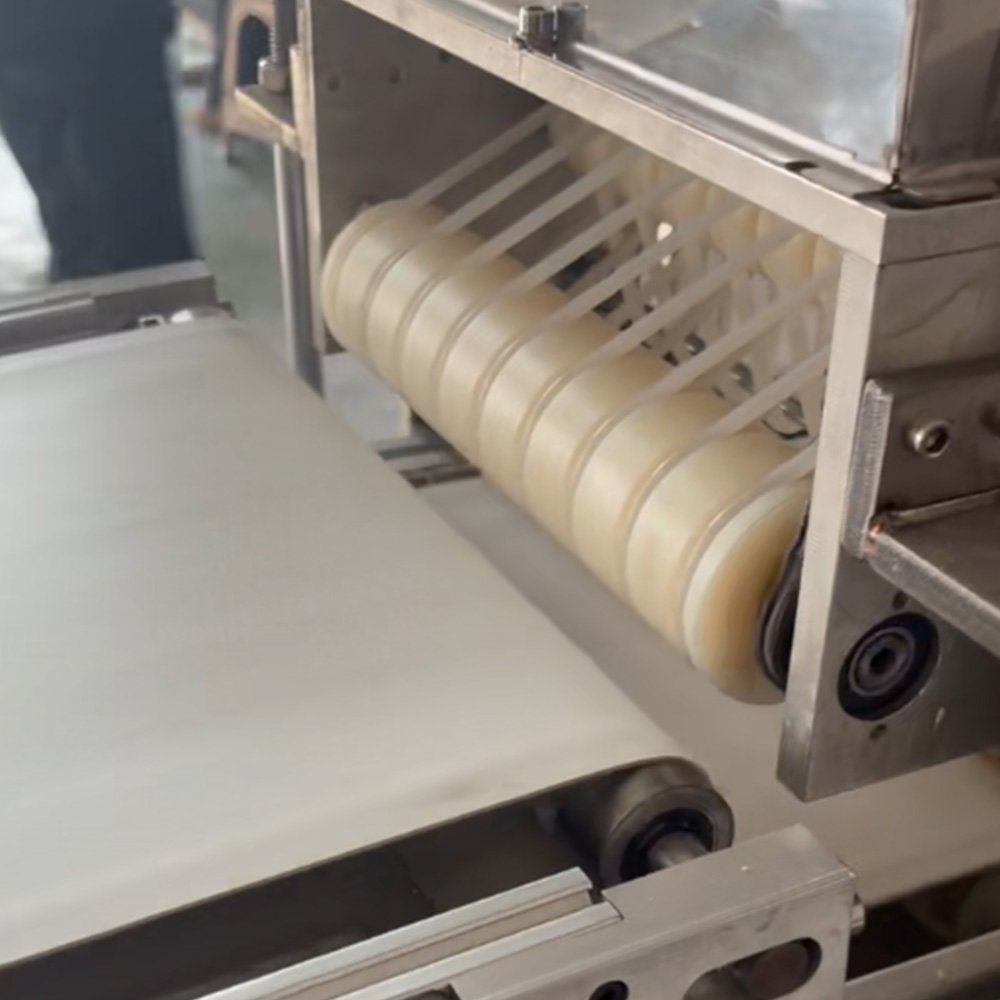
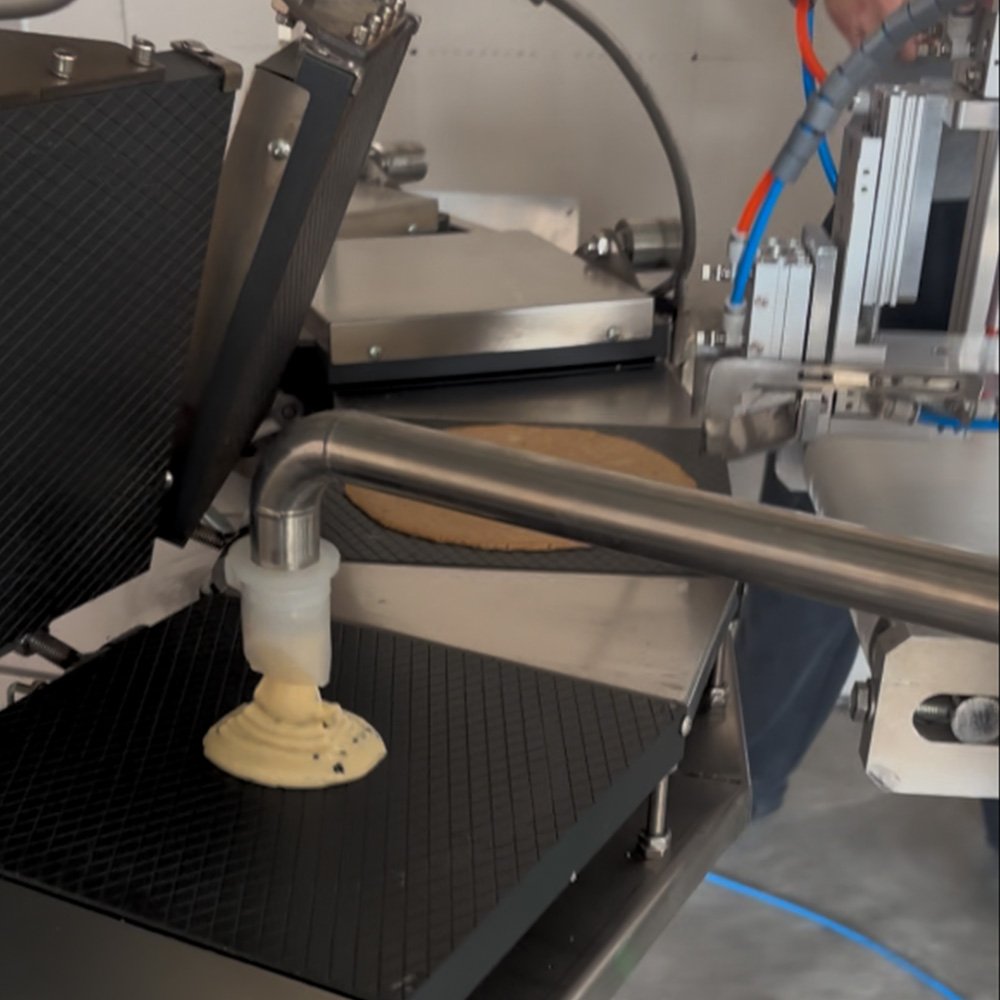
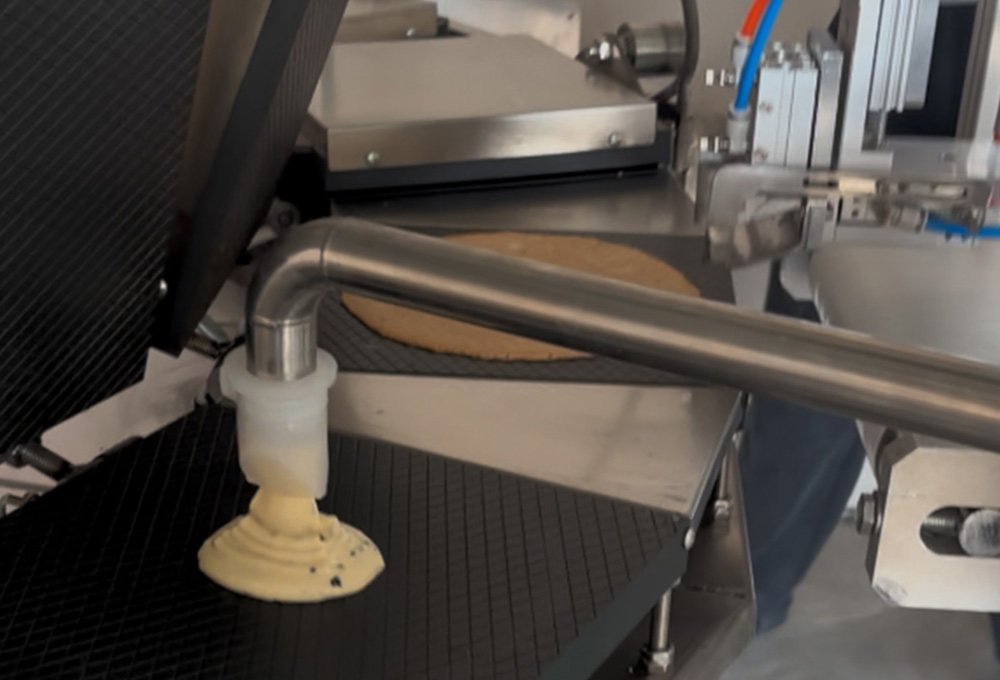
The entire process is fully automated, including automatic batter injection, mold clamping, heating and baking, automatic rolling, and demolding and discharging. It enables continuous production with minimal manual supervision, significantly improving production efficiency.
02
Precise Temperature Control and Uniform Heating
The machine adopts electric heating templates with independent temperature control for upper and lower molds, ensuring adjustable and stable temperatures.
The heating plates distribute heat evenly, resulting in egg rolls with a consistent golden-yellow color, no burnt or undercooked spots, and uniform crispness.

03
Neat Roll Shape & High Yield Rate
Automatic mechanical rolling produces compact, evenly-sized rolls with an attractive appearance, no loose layers or breaks.
The non-stick coated molds ensure smooth demolding,minimizing breakage and resulting in a high finished product rate.
Maintenance & Care Guide
Regular maintenance prevents equipment failures, extends service life, and ensures food safety.
| Maintenance Task | Frequency | Key Actions | Purpose |
|---|---|---|---|
| Lubrication | Weekly | Lubricate motors, gears, and hydraulic fittings with food-grade grease | Reduce friction and prevent wear |
| Cleaning | Daily / After Each Use | Clean internal cavities, molds, and conveyor belts; remove food residues | Prevent contamination and maintain hygiene |
| Inspection | Monthly | Check belts, wiring, sensors, and seals for wear or damage | Prevent unexpected breakdowns |
| Calibration | Quarterly | Verify the accuracy of temperature and pressure sensors | Ensure consistent product quality |