
Commercial bakeries rarely buy equipment one product at a time. A producer who already runs a batter baking line for thin, crisp pancakes soon asks whether the same platform can be turned toward a second product family, and the waffle is the most obvious candidate because it shares the same raw material, the same depositing step, and the same downstream cooling and packing route. The question is not academic. Adding a product without adding a machine changes the return on the existing asset, but it also raises practical concerns about plate design, batter behaviour, release quality, and whether the finished piece will actually be recognised as a waffle by the buyer.
Yes, you can make waffles in a pancake machine, but the machine only contributes heat, pressure, and motion. What decides the finished product is the plate definition, the batter formula, and the bake and release settings. A pancake machine with a shallow, lightly engraved cavity will bake a stable waffle style product once the batter is thickened, enriched with fat and sugar, and matched to the right temperature and dwell time. A machine running a standard pancake batter on a plain cavity will still produce a perfectly saleable batter piece, but it will be flat and smooth rather than gridded, and it will not develop the crisp shell a waffle is expected to have.
The sections below set out how the two machine categories differ, how to adapt a batter for a gridded product, how to set the bake parameters, and how to validate the result before committing to tooling.
Can You Make Waffles in a Pancake Machine? The Straight Answer
The short answer is that a pancake machine can produce waffle style products, and in many cases it already has the mechanical capability to do so. Both machine families bake a liquid batter between heated surfaces and remove moisture under controlled contact. The limitation is not the heating system, it is the tooling and the recipe. Change the plate, change the batter, and adjust the bake window, and the same platform produces a different product.
It helps to separate what the machine does from what defines the product. A commercial baking platform for batter based goods performs four functions: it deposits a measured quantity of batter, it applies heat from one or two sides, it holds the piece for a defined dwell time, and it releases the piece for cooling or further processing. Every one of those functions is product neutral. A waffle maker performs exactly the same four functions on a smaller scale. The reason a waffle looks like a waffle and a pancake looks like a pancake is the geometry of the surfaces that touch the batter during baking, together with the rheology of the batter itself.
What the Same Working Principle Actually Allows
Because the underlying mechanism is identical, a pancake machine can bake any product whose format can be expressed as a thin batter layer pressed or deposited onto a heated surface. That includes products with a grid pattern, products with a shallow pocket, products with an embossed edge or logo, and products with a formed border that constrains spread. The constraint is not whether the machine can bake the piece, but whether the plate that defines the piece is available or can be produced.
This is why the practical answer changes depending on what the buyer already owns. A machine supplied with a defined engraved plate is effectively a single product machine until a second plate is introduced. A machine supplied with a removable or interchangeable plate set, or one built to accept custom tooling, is a multi product platform from the start. The distinction has less to do with a supplier’s product category label than with what the plate interface permits.
The Three Conditions That Decide the Result
Three variables determine whether the output of a pancake machine reads as a waffle. Each one can be adjusted independently, and each one can independently prevent a satisfactory result.
| Condition | What It Controls | Effect on the Finished Product |
| Plate and cavity geometry | Surface pattern, piece thickness, edge definition | Determines whether a grid or pocket pattern appears at all, and how deep it is |
| Batter formula | Fat and sugar level, viscosity, solids, leavening | Determines crispness, browning, structural strength, and release behaviour |
| Bake and release parameters | Plate temperature, dwell time, release timing and method | Determines moisture, colour consistency, surface definition, and edge integrity |
The mistake buyers make most often is treating the third condition as the only lever. Raising the temperature and extending the dwell time on a plain cavity with a lean batter will not produce a waffle. It will produce a darker, drier version of the flat piece the machine was already making, and it may begin to damage the surface definition or the edge condition instead.
Pancake Machine vs Waffle Maker: The Differences That Decide the Outcome
The two equipment categories share a heating principle but differ in the four things that shape a baked piece: the surface that contacts the batter, the pressure applied during baking, the thickness the batter is allowed to expand into, and the way the finished piece is separated from the plate. These four differences, not the recipe, produce the visible gap between a smooth flat product and a gridded one.
A waffle is defined by how it is cooked rather than by what it contains. It is a batter or dough product baked between two patterned plates, and the pattern is what creates the characteristic grid and the crisp exterior that surrounds a softer interior (see the Waffle reference for the standard definition and the range of regional formats). That definition points directly at the equipment variable: the pattern is a property of the plate, so the plate is where the decision is made.
Cooking Surface and Cavity Geometry
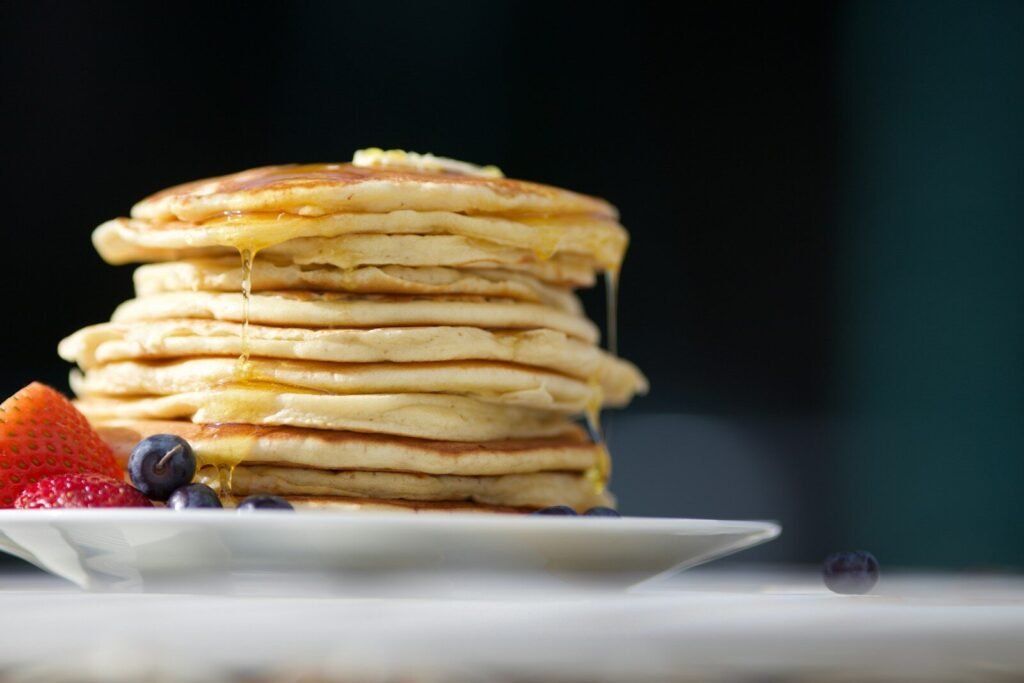
A machine built for flat pancakes uses a shallow, smooth or lightly textured cavity. Its purpose is to hold a measured quantity of batter in a defined footprint while the batter sets and browns on a single face. Contact with the upper surface, if any, is limited, so the batter spreads to fill the available area and produces an evenly thin piece with a smooth face.
A machine built for gridded products uses a deeper cavity with a raised lattice or pocket pattern. The batter is forced into the recesses, and the raised ribs press the surface of the piece, producing alternating areas of thick and thin material. The thin areas bake faster and brown more, which is what generates the crisp shell, and the thick areas retain moisture, which is what keeps the interior tender. Cavity depth therefore controls both the visual pattern and the texture gradient.
Pressure, Thickness and Steam Control
Pressure during baking changes how a batter behaves. When the upper surface closes onto the batter, the piece cannot expand freely upward. The steam generated inside the batter has to escape through the edges or through the thinner sections, and the resulting internal pressure drives the batter into every corner of the pattern. This is why a gridded product shows such clean definition, and it is also why a batter that is too thin will fail in a deep cavity: it cannot resist the steam pressure and it will leave voids or collapse.
A shallower pancake cavity applies less constraint. The batter rises against the upper surface only lightly, so the piece keeps more of its own structure and the surface stays smooth. When adapting a waffle style product to a pancake machine, the operator needs to decide whether the existing cavity provides enough constraint to define a pattern, and if not, whether the batter can be thickened enough to hold definition on a shallow plate.
Release Systems and Plate Configuration
Separation is an engineering step in its own right, not an afterthought. On a patterned product, the contact area between batter and metal is larger than on a flat piece, and the thin sections are more fragile. Producers use needle rolling, air blowing, or a combination of both to lift the piece without tearing the edge. The choice depends on the thickness, texture, and fragility of the specific product rather than on the machine category.
Plate configuration also determines how much product the platform can deliver in a shift. Multi cavity configurations produce many small pieces per cycle with uniform size, which suits portioned retail or foodservice items. Multi slice configurations produce fewer, larger pieces per cycle with a larger formed area, which suits products that need a defined shape, a printed pattern, or a filling. Both routes can be turned toward waffle style products, but the resulting piece will differ in size and in how much pattern detail it can carry.
Side-by-Side Comparison
| Parameter | Pancake Style Platform | Waffle Style Platform |
| Cooking surface | Shallow cavity, smooth or lightly textured | Deep cavity with lattice or pocket pattern |
| Contact faces | One face heated, light upper contact | Both faces heated with firm closure |
| Piece thickness | Thin and uniform | Alternating thick and thin sections |
| Surface result | Smooth, even colour | Grid or pocket pattern with pronounced browning on ridges |
| Structural requirement | Low, the piece sets quickly | High, the batter must resist steam pressure |
| Release method | Simple lift or scraper | Needle rolling, air blowing, or combined |
| Batter requirement | Lower fat, higher liquid, pourable | Higher fat and sugar, thicker body |
| Typical configuration | Multi slice or continuous format | Multi cavity or formed single piece |
Reading the table laterally is the fastest way to audit a specific machine against a specific product idea. Any row where the existing platform sits on the left and the intended product sits on the right identifies a gap that the batter, the plate, or the process will have to close.
How to Adapt Waffle Batter for a Pancake Machine
A waffle batter cannot simply be poured into a pancake machine and expected to work. Waffle batter is richer in fat and sugar, and it is thicker than pancake batter, because it has to survive enclosure between two hot plates, resist steam pressure, brown quickly, and release cleanly. The adaptation is therefore a matter of increasing fat, adjusting sugar upward within the limit the plate can tolerate, reducing free liquid, and letting the batter rest before depositing.
The gap between the two batters is narrower than it appears. Both use flour, liquid, leavening, and often egg. The difference is the balance, and the balance is what the baking surface demands.
Fat and Sugar: The Two Levers Behind Crispness and Browning
Fat performs three jobs in a gridded product. It lowers surface tension so the batter releases from the metal instead of bonding to it. It creates a frying effect at the interface with the hot plate, which is what produces the crisp shell. And it shortens the crumb, so the piece snaps when bitten rather than stretching. A lean pancake batter has enough fat to stay tender on a flat plate, but not enough to enable clean release or a crisp surface on a patterned one.
Sugar performs two jobs. It feeds the browning reaction that creates colour and flavour, and it lowers the temperature at which that browning begins, so the surface colours before the interior dries out. The relevant chemistry is the heat driven reaction between sugars and proteins that produces the brown crust and its characteristic aroma, described in detail under the Maillard reaction. Because the reaction accelerates quickly, the sugar level has to be matched to the plate temperature: too little produces a pale surface with no crust development, too much produces scorching at the ridges while the interior is still underbaked.
Viscosity, Solids and Rest Time
Viscosity decides whether the batter stays where it is deposited and whether it fills the pattern evenly. A batter that is too thin spreads past the cavity boundary, floods the plate, and bakes into a piece with weak definition and thin edges that break at release. A batter that is too thick deposits unevenly, leaves unfilled corners, and produces a piece with dense patches and a mottled surface.
Solids content matters as much as apparent thickness. A batter can be thick because it is loaded with flour, or thin because it is loaded with liquid. The first over develops gluten and produces a tough, chewy piece; the second carries too much water into the bake and produces a piece that steams rather than crisps. Resting the batter before depositing allows the starch to hydrate and the leavening to begin working, which stabilises viscosity and reduces the variation between the first and last pieces of a run.
Adjustment Reference Table
The table below gives the direction of adjustment rather than a fixed recipe, because the correct setting depends on the flour, the plate temperature, and the target piece weight. Use it as a checklist for reviewing an existing formula.
| Component | Standard Pancake Batter | Direction for a Gridded Product |
| Fat | Low, sufficient for tenderness only | Increase substantially, enough to lubricate the plate and fry the surface |
| Sugar | Low to moderate | Increase moderately, within the limit set by the plate temperature |
| Free liquid | Higher, for a pourable batter | Reduce, keeping the batter thick but still deposit able |
| Egg | Often one per batch | Consider an additional yolk for structure, or a whipped white for lift |
| Leavening | Moderate | Review against the batter thickness and the dwell time available |
| Rest time | Short | Extend before depositing, until viscosity is stable |
| Mixing | Until just combined | Unchanged, over mixing develops gluten and toughens the piece |
Leavening and Structure
Leavening has to be considered together with the cavity, because a deeply patterned plate constrains how much the batter can rise. An aggressive leavening system in a shallow cavity produces a piece that lifts unevenly and loses surface definition. A weak system in a deep cavity produces a piece that fails to fill the pattern and releases with collapsed pockets. Where extra structure is needed, additional egg white contributes protein that sets quickly under heat and supports the thin sections, while an additional yolk contributes fat and emulsifiers that keep the crumb tender and the release clean.
Setting Bake Parameters: Temperature, Dwell Time and Release
Once the plate and the batter are settled, three parameters determine whether the run is stable: the plate temperature, the dwell time, and the moment and method of release. These are not independent settings. A change to the batter requires a compensating change to the temperature or the dwell time, which is why a new product has to be tuned as a system rather than adjusted one dial at a time.
Plate Temperature Windows
Temperature controls how quickly the surface sets, how fast moisture leaves the piece, and how far the browning reaction proceeds. A plate that is too cool lets the batter spread further before it sets, which flattens the definition and produces a pale, soft result. A plate that is too hot sets the surface before the batter has filled the pattern, which produces incomplete definition, scorched ridges, and an underbaked interior.
The correct set point sits between the two, and it moves with the sugar level. A batter with more sugar needs a slightly lower plate temperature for the same colour outcome, while a leaner batter needs a slightly higher one. Trial bakes should therefore record temperature and sugar level together, not separately.
Dwell Time and Moisture Removal
Dwell time is the period between closure and release, and it exists to remove moisture. A gridded piece starts with more water than a flat piece of the same weight, because the batter is thicker and the surface area is larger. If the piece is released too early, the interior moisture migrates to the crust during cooling and the crust softens, so the piece loses the crispness that justified the format in the first place.
Extending the dwell time increases crispness and colour, but only up to a point. Past that point the piece loses too much moisture, the crumb becomes hard rather than tender, and the edge condition deteriorates, which then affects release. The useful window is bounded on both sides, and it should be recorded as a range rather than a single value for each product.
Reading the Steam Signal Before Release
Operators need a release cue that does not depend on opening the plate. The practical signal is the behaviour of steam escaping from the edges of the mould. While moisture is still leaving the piece rapidly, steam is visible and continuous. When the rate drops, the visible steam thins and then stops. Opening the plate before the steam slows releases a piece that has not yet set, which tears at the edge, sticks to the pattern, and leaves residue that affects the next cycle.
A second cue is the piece’s relationship to the cavity. A piece that is ready releases with only light assistance. A piece that resists is telling the operator that either the dwell time is short or the batter lacks fat, and forcing it removes surface material from the pattern, which degrades every subsequent piece.
A Repeatable Production Sequence
- Bring the plates to the target temperature and confirm recovery after the previous cycle.
- Confirm batter viscosity and temperature immediately before depositing, since both drift during a shift.
- Deposit a measured and consistent quantity into each cavity position.
- Close the plate and hold for the defined dwell time without intermediate opening.
- Watch the edge steam and wait for the rate to drop before considering release.
- Release using the specified method and confirm the piece is intact across the whole pattern.
- Move the piece immediately to cooling, without stacking, so residual steam escapes rather than softening the crust.
- Record the cycle parameters and the piece condition, so that drift can be traced rather than guessed.
Which Pancake Machine Configurations Suit Waffle-Style Production
Any configuration that can hold a defined cavity and control dwell time can bake waffle style products. The practical differences come down to cavity count, single piece size, plate definition, and whether the release system suits a fragile patterned piece. Choosing a configuration is therefore a question about the target product and the required output per shift, not about whether the machine is nominally a pancake machine.
Multi-Cavity vs Multi-Slice Formats
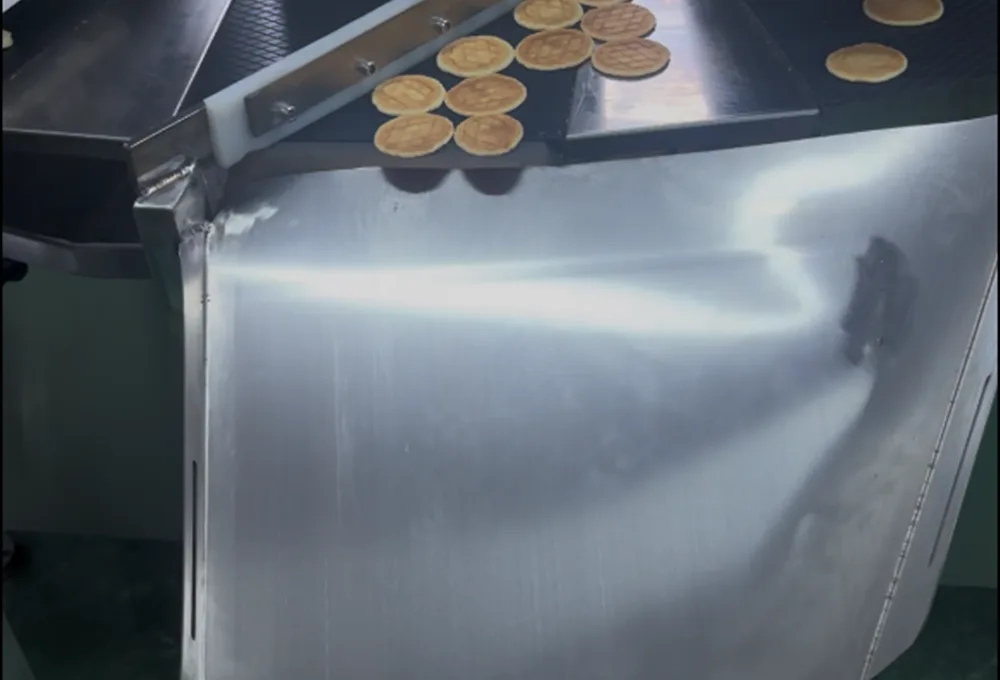
Multi cavity configurations place many small, identical pieces on the plate. They suit portioned waffle style products such as bite sized items for foodservice, catering trays, or retail packs, and they deliver high piece counts per cycle with very uniform size. The trade off is that each cavity carries limited pattern detail, because the piece is small and the pattern has to be scaled to fit.
Multi slice configurations place fewer, larger pieces on the plate. They suit products that need a defined silhouette, a legible embossed pattern, or a form suitable for filling and folding. The trade off is a longer bake and a larger plate area per piece, and the release is more demanding because a bigger patterned piece is more likely to distort if it is lifted unevenly.
| Configuration Focus | Product Fit | Output Basis | Main Constraint |
| Many small cavities | Portioned bites, catering and retail packs | Pieces per cycle and per shift | Limited space for pattern detail |
| Few large slices | Defined shapes, embossed patterns, fillable formats | Pieces per cycle, piece weight, plate area | More demanding release and longer bake |
| Wind blown designs | Thinner, lighter pieces with even colour | Pieces per cycle, plate throughput | Less compression, so shallower definition |
| Contact and compression designs | Patterned pieces with pronounced surface definition | Pieces per cycle, cavity depth | Higher requirement on batter structure |
Throughput, Plate Area and Output Basis
Output should be stated on a single agreed basis before any machine is compared. Pieces per cycle, pieces per shift, and kilograms per hour refer to different duties, and treating one as a substitute for another hides exactly the variable the buyer needs to evaluate. For a patterned product, output is further constrained by the release step: a configuration that bakes quickly but releases slowly will be limited by release, not by the plates.
Wind-Blown and Contact-Baking Designs
Some platforms use forced air in combination with heated plates, which promotes even colour and light texture across a large plate area. Others rely on direct contact and compression. The first tends to favour thinner, lighter pieces with uniform browning, and the second favours pieces where surface definition is the point. Neither is better in the abstract. A waffle style product that depends on pronounced ridges and deep pockets will generally want more compression and less airflow, while a light crisp product may be better served by the opposite.
Common Problems and How to Correct Them
Most failures in waffle style production trace back to three root causes: insufficient fat in the batter, insufficient plate temperature, and premature release. Almost every visible defect, from sticking to pale surfaces to uneven colour, resolves once those three are corrected in the right order, because each one affects the release of the next.
Sticking and Torn Edges at Release
Sticking is a fat and temperature problem before it is a coating problem. A batter without enough fat bonds to the metal, and a plate that has not recovered its temperature after the previous cycle sets the surface unevenly, which increases the bond in some areas and not others. The edge tears first, because the edge is the thinnest part of the piece and the last to develop structure.
The correction order matters. Confirm the plate has reached temperature and has recovered from the previous cycle, then confirm the batter carries enough fat, then confirm the dwell time is long enough to set the surface. Only after those three checks should a release aid or a coating change be considered.
Pale Surfaces with No Grid Definition
A pale piece usually means the surface is not reaching a high enough temperature or the batter is not developing enough colour chemistry. Low plate temperature, low sugar, a batter that is too thin to fill the pattern, and a dwell time that is too short all produce the same visible outcome, so they have to be checked in sequence rather than in parallel.
Definition loss specifically points at the batter and the cavity rather than the heat. If the piece is flat with soft ridges, the batter is probably spreading more than the cavity can constrain, which is a thickness and viscosity issue. If the ridges are present but shallow, the cavity may not be deep enough for the target pattern and a plate change is the real answer.
Uneven Browning Across Cavities
Colour variation across a plate has several common sources. Plate temperature may vary from position to position if the heating elements are unevenly distributed. Deposit volume may vary if the depositing system is not calibrated per position. Bake time may vary if the piece is released position by position without a consistent sequence. When a single position is consistently different from its neighbours, the cause is usually mechanical rather than formula related, and it should be investigated with a temperature survey rather than with a recipe change.
Fault-Finding Reference
| Symptom | Likely Cause | Adjustment Direction |
| Piece sticks and tears at the edge | Insufficient fat, low plate temperature, short dwell time | Increase fat, confirm temperature recovery, extend dwell |
| Surface pale with soft ridges | Low temperature, low sugar, batter too thin | Raise temperature, review sugar level, thicken the batter |
| Flat piece with no pattern | Cavity too shallow, batter spread too far | Review plate definition, reduce free liquid, increase solids |
| Uneven colour across positions | Uneven heating, uneven deposit volume, inconsistent release sequence | Survey plate temperature, calibrate depositing, standardise release order |
| Crisp on release, soft after cooling | Released too early, or cooled with stacking | Extend dwell, move to cooling without stacking |
| Hard crumb with brittle edges | Dwell time too long, temperature too high | Shorten dwell, reduce plate temperature |
| Collapsed pockets | Batter too weak to resist steam, leavening too aggressive | Increase structure, review leavening level |
Waffle Formats a Pancake Line Can Produce
The range of formats a pancake machine can produce depends on whether the necessary plate exists or can be produced. Formats that match an existing cavity definition can be run with batter and process changes alone. Formats that require a specific pattern, depth, silhouette, or embossing need a new plate, and that tooling decision should be made before the product concept is finalised.
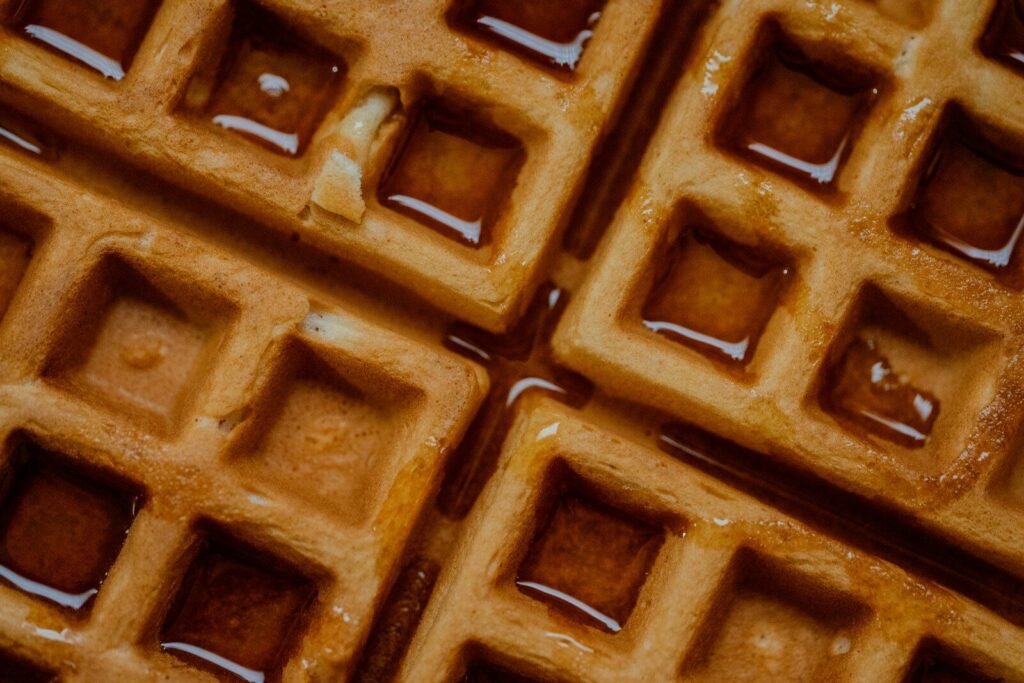
Formats That Work With the Existing Plate
When the existing cavity already carries a shallow pattern, a formed border, or a defined silhouette, the same plate can produce a family of closely related products by varying the batter and the process. A plain round cavity can produce a smooth snack base, a lightly embossed cracker style piece, or a thin crisp disc. A shallow pattern can carry a subtle surface texture that distinguishes one product line from another without any tooling change. The variation is achieved through formula, colour, and finishing rather than through geometry.
Formats That Require New Engraved Tooling
Deep pocket waffles, pronounced lattice patterns, shaped silhouettes, embossed lettering, and any product whose identity depends on a specific relief require an appropriately engraved plate. This is not a limitation of the machine but a property of the process: the pattern is created by the tooling, and a different pattern means different tooling. Buyers should confirm which plates are included in a quotation and what product change would require new tooling, because this determines the real cost of expanding a product range.
Related Batter-Based Products on the Same Platform
The same reasoning extends beyond waffles. Any thin batter product that can be defined by a pattern, a formed edge, or a controlled thickness can be produced on the same platform with the right plate. This is why producers think in terms of a product family rather than a single item, and why the plate interface is often the most commercially significant part of a machine specification.
Validating a Waffle Product Before You Commit
Selection should never be made by comparing photographs. A manufacturer can produce a plate and bake a sample, and the only reliable basis for a decision is a trial that records the agreed sample, the batter window, the process settings, and the resulting piece condition. If those records are kept, the product can be reproduced. If they are not, the buyer cannot tell whether a later batch has drifted or whether the original sample was never stable.
Define the Approval Sample First
The trial should begin with the target product, not with the machine. Define the intended piece dimensions, piece weight, surface pattern, thickness, colour range, texture, and acceptable edge condition before the first bake. Each of these becomes a criterion the sample must satisfy, and each can be measured rather than described.
The recipe window should be defined at the same time. Record the allowable range for fat, sugar, liquid, and solids, because a product that only works at one exact formula is fragile in production. The process settings should be captured in the same document: plate temperature, dwell time, release method, and deposit volume per position.
What to Record During a Trial
A complete trial record covers the product, the process, and the operating conditions together. The list below is the minimum useful set.
- Piece dimensions and piece weight, measured rather than estimated
- Number of pattern repeats and the depth of the pattern in the finished piece
- Thickness at the ridge and at the pocket
- Colour range across a full plate, recorded at more than one position
- Texture observations for the crust and the crumb
- Edge condition, including whether any position shows damage at release
- Plate temperature at each position, not only at the centre
- Dwell time and the observed steam behaviour at release
- Batter viscosity and batter temperature at the point of depositing
- Release condition of the plate after a full cycle, including residue
Trial Checklist
- Confirm the target product definition and the measurable acceptance criteria.
- Confirm the batter formula and the allowable range for each variable.
- Run a temperature survey across the plate before depositing any batter.
- Bake a full plate at the proposed settings and evaluate every position.
- Repeat the bake at the upper and lower limits of the dwell time window.
- Repeat the bake at the upper and lower limits of the intended batter range.
- Confirm that the piece releases intact at every position after a full cycle.
- Confirm the piece reaches the designated handoff point in a stable condition.
- Record which parameters were confirmed by trial and which remain specific to the project.
- Review the record against the acceptance criteria before ordering tooling.
Food-Contact and Market Compliance
Because the plate and any release aid come into direct contact with food, compliance is part of the specification rather than a separate concern. In the European Union, the general framework for materials intended to come into contact with food is set by Regulation (EC) No 1935/2004, which requires that such materials be sufficiently inert that they do not transfer constituents to food in quantities that endanger health or unacceptably change the composition or organoleptic properties of the food (see the consolidated text of Regulation (EC) No 1935/2004). Buyers selling into regulated markets should confirm the applicable requirements for the cooking surface and any coating or release agent before production begins, and should keep the supplier documentation on file with the trial record.
Frequently Asked Questions
The three questions below cover the points that come up most often once the technical case for running waffle style products on a pancake machine has been accepted: how far the format can be pushed, what tooling rather than what machine is actually required, and how the product behaves on the route to freezing and packaging.
Can a pancake machine produce deep-pocket Belgian style waffles?
It can produce a deep-pocket product, but the pocket depth is created by the plate rather than by the machine. Belgian style waffles depend on a deep cavity and a batter that is strong enough to resist steam pressure and fill the recesses without collapsing. If the required cavity depth is available in the tooling, or can be engraved, the platform can bake the piece. Without that plate, a shallow cavity will produce a piece with a much flatter profile regardless of how the batter is adjusted.
Does switching to waffle production require a second machine?
In most cases no, provided the plate interface allows a second set of tooling to be fitted. The heating system, depositing system, drive, and controls perform the same functions for both products. What changes is the plate, the batter, and the process window. The practical question is not whether a second machine is needed but whether the machine can accept a different plate, what that plate costs, and how long a changeover takes between the two products.
Can waffle-style products from a pancake machine be frozen or packed for retail?
Yes, and the format is well suited to it, but the freezing and packing route has to be designed together with the bake. A piece that is released with too much residual moisture will lose its surface definition and soften during freezing. Products intended for retail or foodservice distribution should be baked to a slightly drier condition than products intended for immediate service, cooled in a single layer so residual steam escapes, and then frozen or packed without delay. The pack format, the stacking configuration, and the reheat method all influence how much crispness survives to the point of consumption.